In 2019 the SMH had documents proving Qantas chartered a cargo jet to a consortium financially backed by an international organised crime gang yet chose to ignore the story
14 April 2020 | Marcus Reubenstein
In July last year it was revealed Qantas had signed a $14.7 million charter agreement with a Macau-based company called JetFast Limited, which was backed by one of Asia’s most powerful triad gangs.
Sydney Morning Herald (SMH) investigative reporter, Kate McClymont had copies of a Letter of Intent signed by Qantas Freight’s Chief Operating Officer and countersigned by Lai Pak Leng, son of the man reputed to be the kingpin of Macau’s most-feared criminal organisation.

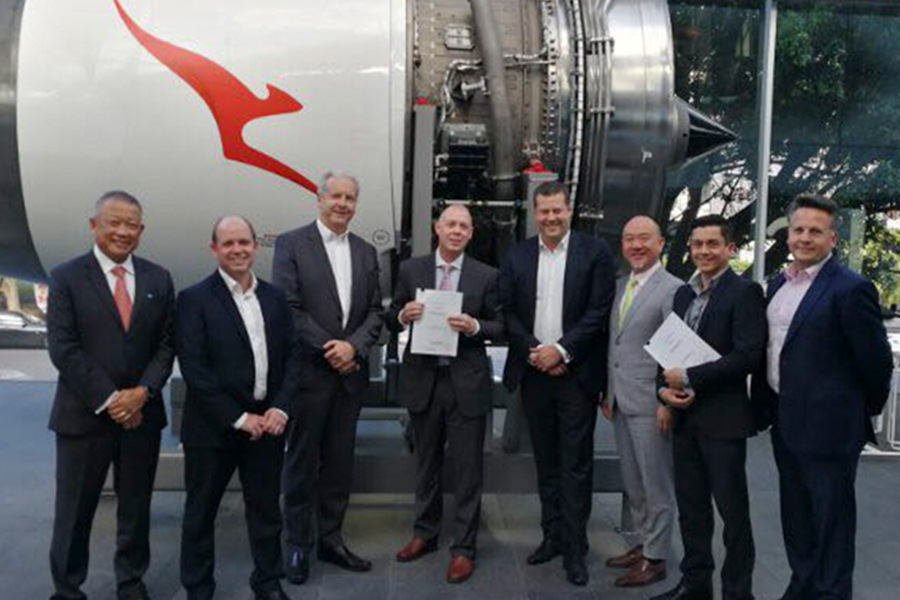
Not only that, McClymont and the SMH, had access to images of members of the organised crime-backed consortium as they visited Sydney Airport, posing for pictures with Qantas senior management and standing alongside a Boeing 767 cargo plane.
Yet, the Herald refused to run the important public interest story of Australia’s national airline entering a 12-month agreement with an organised crime financed company.
Instead, the story was picked up by independent investigative news site MichaelWest.com.au which had enough information to write two feature-length news stories covering the failed the venture and Qantas’s appalling lack of diligence in establishing the source of finance for a start-up company with no assets and a senior management team with no experience in the international air freight business.

Why ignore cargo flights with real criminals?
For the past month McClymont, along with her Melbourne Age colleague Nick McKenzie, has obsessively pursued Chinese-Australian companies over humanitarian aid flown to Wuhan at the start of the coronavirus crisis. In doing so, paying great attention to business links with the Chinese government and only scant attention to the facts.
It is correct that private individuals, as well as employees of Chinese-owned, Australian incorporated businesses, did buy large quantities of face masks and other medical supplies which were sent to Wuhan. This sending of aid was applauded by the Australian Medical Association and supported by a number of Australian businesses.
However, the suggestion of reports in the SMH and The Age is that these businesses were under marching orders from the Chinese Communist Party. Not a scintilla of proof was published to support that assertion, nor was there evidence that any laws had been broken.
So, why would Nine Entertainment, the newspapers’ publishers, pass up an expose of some real criminals who’d signed up for cargo flights between Australia and a Chinese territory for an entire year?
This story had two crucial elements which The Age/SMH Wuhan investigation does not:
The architect of the Qantas/Triads deal was Australian (not Chinese); and Nine Entertainment pockets a very sizeable chunk of Qantas’s estimated $30 million Australian advertising spend.
‘Entertainment’ trumps news
Not only does Nine Entertainment own the SMH and The Age, it owns the Australian Financial Review, the top-rating Nine Television network, a stable of magazines and the national radio network which employs, arguably Australia’s most influential media figure, Alan Jones.
In the COVID-19 crisis Jones has made a name for himself pouring constant scorn on China and downplaying the seriousness of the pandemic. For weeks telling his mostly elderly radio audience – far and away most at risk of death from this coronavirus – that it is nothing more than a ‘flu’.
Cash for comment
Two decades ago, Jones who was already the nation’s top radio host, was caught up in a major scandal which came to be known as “cash for comment”. It was revealed he and, fellow broadcaster John Laws, had received millions of dollars in secret payments in order to give favourable on-air commentary about a number of companies.
In 1999, the federal government’s Australian Broadcasting Authority investigated the matter, finding 90 breaches of the Broadcast Services Act (1992) principally committed by Jones, Laws and then employer 2UE (later acquired by Nine Entertainment).
Among the secret payments, the inquiry found one of $100,000 paid to Alan Jones. And who was that payment from? Qantas.
Qantas and the triads
When first quizzed by the media on its deal with the murky JetFast Limited, Qantas lied about the nature of the agreement and the millions of dollars in financial damage it had caused to shareholders of Australia’s national carrier.
The entire venture was the brainchild of a 51 year-old Australian conman named Reuben Milne. In conducting its due-diligence Qantas overlooked the fact that one of the directors of JetFast was Lai Pak Leng the son of well-known crime figure Lai Tong Sang.
As the deal unravelled, Milne briefed an Australian lawyer alleging that Qantas was fully aware of JetFast’s criminal connections before the airline signed the multi-million dollar charter agreement.
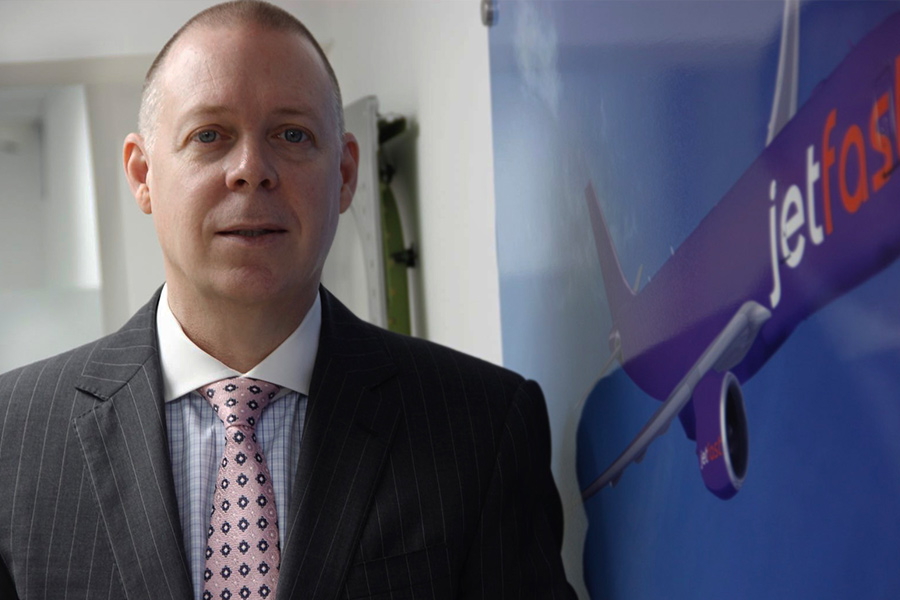
Milne identified Harold Pang, Qantas Cargo’s Head of Business Development as the airline executive charged with the responsibility of conducting due diligence.
Slack due diligence
Fearing Qantas might pursue him individually for damages, Milne told a lawyer Pang was aware of JetFast’s triad connections within two days of commencing his investigations. Milne further alleged he and Pang switched to ‘back channel’ communications using the secure encrypted WhatsApp messaging service to communicate.
In 2008 Pang was named in a US criminal indictment over a price fixing case which saw Qantas pay US$61 million in fines and a plea deal which saw another Qantas executive jailed for eight months. The US Justice Department alleged that Qantas had manipulated air freight prices in order to eliminate competitors and eventually reap $600 million in financial benefits.
The Sydney Morning Herald had documents showing a Qantas executive, previously named in a major criminal conspiracy (to which Qantas pleaded guilty) had been a key negotiator in the Macau deal – yet chose to ignore the story.
Despite Milne being the frontman, JetFast’s office was listed at the same Macau address of a property group controlled by Lai Pak Leng. A simple Google search reveals numerous reports on his family with allegations of links to gambling, prostitution, money laundering and drug trafficking.
Conman on the run
While the source of JetFast’s finances have apparent links to organised crime, it seems those financial backers were also fleeced by Milne to the tune of HK$30 million. Consequently, for the past two years has Milne been in hiding somewhere in Australia or New Zealand.
This author was a minor party to this deal which was stuck two years prior to the establishment of APAC News. I was engaged to conduct public relations work for JetFast for the company’s launch – after the Qantas deal was struck. JetFast did not pay for any of this work.
Unlike Qantas, I was not made aware of the directors of the company. Furthermore, as an agreement with a multi-billion dollar publicly-listed Australian company was in place, the assumption was that JetFast was a legitimate business.
Believing it was in the public interest that Australians should know their national airline had effectively gone into business with a major crime syndicate, I handed a large number of damning documents over to Kate McClymont in June of 2019.
She declined to write the story.
The hypocrisy of The Age and Sydney Morning Herald
Kate McClymont and Nick McKenzie (who was also aware of the Qantas-triads deal) have gone after Chinese companies and Chinese-Australians with unbridled fervour in attempts to establish a conspiracy of Chinese government-ordered operations to secretly have Chinese-Australians ship medical supplies to China.
One of the pillars of their investigations is the suggestion that ‘secret shipments’ of medical supplies were being spirited out of Australia. This is a lie.
The humanitarian air cargo flight, to which they mainly refer, departed from Sydney on 23 February 2020. It was no secret – more than a dozen journalists and four television news crews were there.
In addition, the humanitarian flight was coordinated with the direct assistance of Sydney Airport, the participation of Australian publicly-listed A2 Milk Company and a senior representative of the NSW Department of Investment and Trade.
Yet when a shady Australian businessman, with proven links to a major international crime syndicate, signs a deal with Australia’s national airline these top public-interest journalists are completely silent.