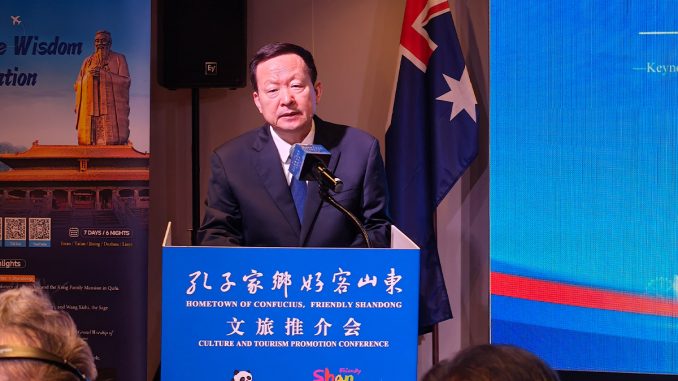
The most senior Shandong province tourism delegation, led by Shandong governor Zhou Naixiang, touched down in Sydney to promote what is fast becoming one of China’s premier travel destinations.
Shandong governor, Mr. Zhou Naixiang told a packed audience at the China Cultural Centre in Sydney that there are many synergies between Australia and Shandong with similar lifestyles and attractions—not the least of which is the love of a cold refreshing beer.
In a little-known fact, it was revealed that the first batch of the world-renowned Tsingtao beer was brewed in Shandon in 1903 using Australian barley.
Mr. Zhou was joined at the speakers’ podium by The Honourable Ben Franklin, president of the New South Wales Legislative Council; City of Sydney councillor, Robert Kok; Mr. Wang Yu, Consul General of China in Sydney; and representatives from the travel industry and airlines.
Sights abound
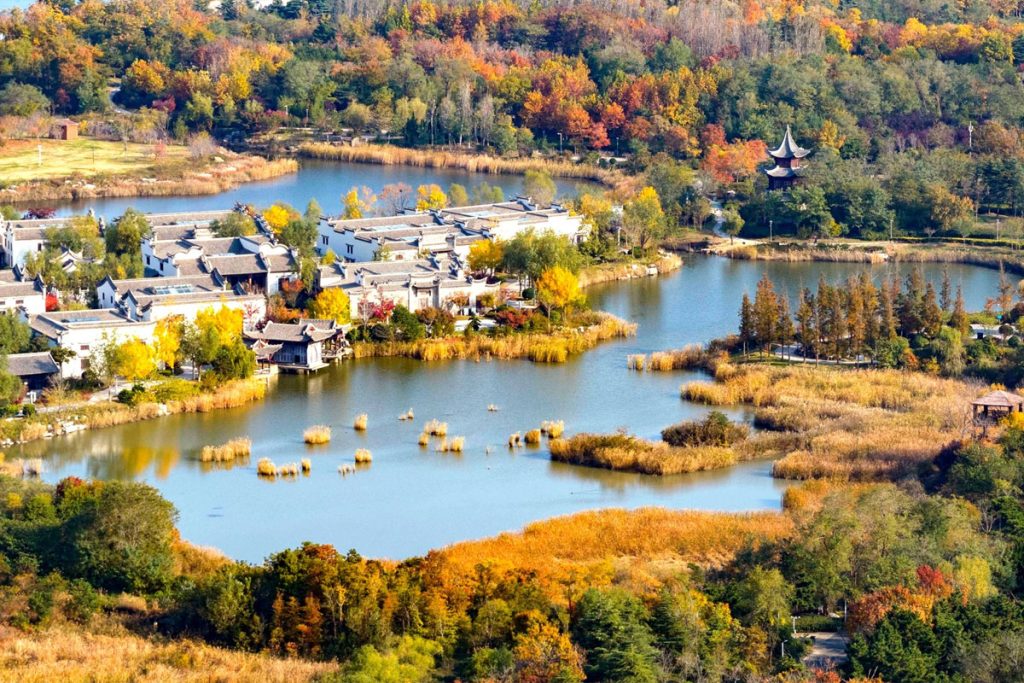
Shandong Province, stretched along China’s eastern seaboard on the Yellow Sea, is one of the country’s most culturally significant and naturally diverse destinations. Known as the birthplace of Confucius, home to sacred mountains, golden beaches, ancient temples and some of China’s most recognisable cuisines, Shandong blends heritage and modern vibrancy in a way few regions can match. For travellers seeking a deeper understanding of Chinese civilisation—while still enjoying wide coastlines, fresh seafood and dramatic landscapes—Shandong offers an exceptional, often under-appreciated, experience.
Qufu: Birthplace of Confucius
No visit to Shandong is complete without exploring Qufu, the hometown of China’s greatest philosopher, Confucius. The city is home to the Confucius Temple, Confucius Mansion and the Confucius Forest, collectively a UNESCO World Heritage Site. The temple complex, with its courtyards, ancient cypress trees and stone-carved steles, is often compared to Beijing’s Forbidden City for its grand architecture. Visitors can walk through the halls where emperors once paid homage, observe traditional rituals, and wander the peaceful forest where more than 100,000 descendants of Confucius are buried. The town itself has retained much of its ancient charm and provides a rare glimpse into China’s scholarly past.
Mount Tai: The Sacred Peak
A short journey from Qufu lies Mount Tai, the most revered of China’s Five Great Mountains. For over 3,000 years, emperors, poets and pilgrims have ascended its stone steps to pray for peace and prosperity. The climb—over 6,000 steps to the South Heavenly Gate—is demanding but deeply rewarding. Along the way are ancient temples, cliffside inscriptions, and panoramic views of the plains below. At the summit, the Jade Emperor Peak offers a breathtaking sunrise that has inspired Chinese art and literature for centuries. For those less inclined to climb, cable cars offer easy access to the upper reaches, ensuring the mountain’s beauty is accessible to all.
Qingdao: Beaches, Beer and European Charm
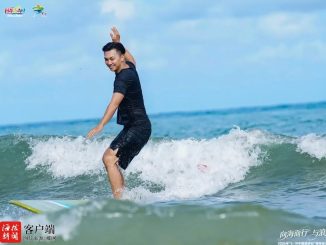
On the coast, the city of Qingdao stands out as Shandong’s most cosmopolitan destination. Once a German concession, Qingdao retains a strong European architectural influence, with red-tiled rooftops, steep cobbled streets and historic churches. Its seaside promenade, golden beaches and mild climate make it a favourite summer getaway.
The city is also famous for Tsingtao Beer, one of China’s most iconic brands. The Tsingtao Brewery Museum offers tours that explain its German origins, historic brewing techniques and, of course, tastings. For panoramic views of the coastline, visitors can climb Xiaoyushan Hill, stroll along Zhanqiao Pier, or take a cable car up Laoshan Mountain, a scenic Taoist site known for its waterfalls, granite peaks and crystal-clear springs.

Yantai and the Shandong Peninsula
Further along the peninsula, Yantai offers stunning coastal scenery, vineyards, and the opportunity to visit Penglai Pavilion, the legendary home of Taoist immortals. With its misty islands and ancient fortress walls, Penglai has long been a symbol of myth and mystery in Chinese folklore. Yantai is also China’s premier wine region, producing some of the country’s best-known vintages in rolling hills that resemble the Mediterranean.
Jinan: The City of Springs
Shandong’s capital, Jinan, is known as the “City of Springs” for its 70-plus artesian springs that bubble up across lakes and parks. The most famous, Baotu Spring, has been celebrated for centuries in poetry and painting. Neighbouring Daming Lake offers serene boat rides, willow-lined pathways and pavilions that reflect classical northern Chinese aesthetics. For families, Jinan’s lively shopping districts and modern cultural centres add a contemporary contrast to its natural beauty.

A Province of Heritage and Modern Life
What sets Shandong apart is the way it balances its ancient cultural legacy with dynamic modern growth. Whether exploring Confucian temples, hiking sacred mountains, wandering European-influenced coastal towns or sampling fresh seafood and famous local cuisine, visitors encounter a region that feels both deeply rooted and remarkably open.
Shandong may not yet receive the attention of Beijing, Shanghai or Xi’an, but its combination of spirituality, scenery and history makes it one of China’s most rewarding provinces for travellers seeking authenticity, beauty and cultural depth.
Australian travellers can fly direct to Shandong province from Sydney and Melbourne with weekly flights with China Eastern and Beijing Capital Airlines.