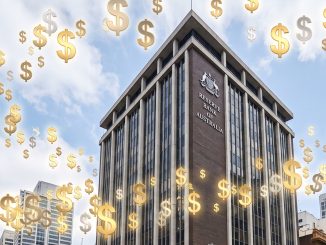
Australia’s cash interest rate remains at 4.35 percent, the central bank not having moved on rates since November 2023
The Reserve Bank of Australia (RBA) has indicated interest rate cuts are unlikely in the near future, as the bank maintained the current cash rate. At its September policy meeting, the RBA held the cash rate steady at a 12-year high of 4.35%, emphasizing the need for a sufficiently restrictive policy to bring inflation back to target levels.
Governor Michele Bullock noted that the board did not actively consider raising rates but did discuss whether its hawkish messaging should be adjusted. Following her comments, the Australian dollar reached a nine-month high of $0.6869 before dipping to $0.6820. Futures saw a slight uptick as markets adjusted expectations, now pricing in a 72% chance of a rate cut by year-end.
“While headline inflation will decline for a time, underlying inflation is more indicative of inflation momentum, and it remains too high,” the RBA board said in a statement, echoing its comments from August.
Markets anticipated a steady outcome given persistent underlying inflation and a robust labor market. In her post-meeting press conference, Bullock clarified that the board did not “explicitly” consider a rate hike this time. “The board discussed whether the messaging should change; however, it is clear that in the near term, interest rate cuts are not on the table,” she added.
Since November 2023, the RBA has maintained rates, determining that the current rate of 4.35%—up from a record low of 0.1% during the pandemic—sufficiently restrains inflation while supporting employment growth. With underlying inflation at a stubborn 3.9% last quarter and a strong job market, there is little urgency for a policy easing, unlike the Federal Reserve’s recent cut of 50 basis points to avert potential job losses.
Says Shane Oliver, chief economist at AMP, “While the RBA did not explicitly consider a rate hike because not enough had changed since the last meeting, its language continues to lean mildly hawkish. We see rates as having peaked, with the first cut coming in February next year. However, despite RBA guidance, a rate cut is still possible by year end if unemployment rises more sharply and underlying inflation falls more sharply.”
Market sentiment in Australia was bolstered by additional stimulus from China’s central bank, which announced cuts to reserve requirements and lending rates, including for existing home loans. Investors are now looking forward to the August inflation data due on Wednesday. While headline inflation is expected to slow to an annual rate of 2.7% thanks to government electricity rebates, core inflation could again reveal persistent price pressures.