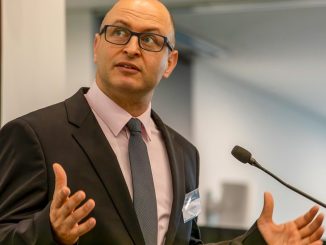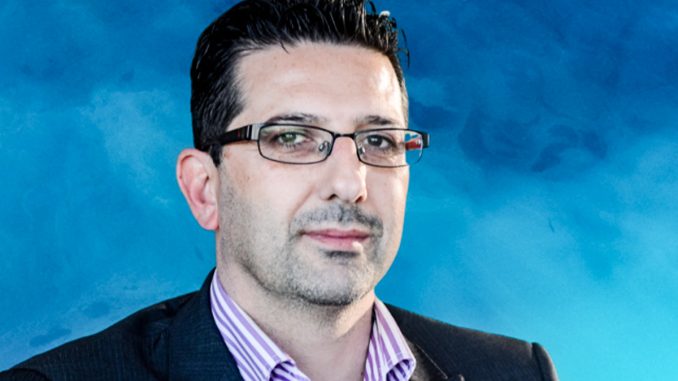
The collapse of the Shield Master Fund has become a defining case study in the risks surrounding Australia’s managed investment and superannuation sectors. At the centre of the affair is Melbourne property developer Paul Chiodo, a former director of Keystone Asset Management, the responsible entity behind Shield.
More than 5,800 investors, many through self managed superannuation funds (SMSF), placed in excess of $530 million into the Shield Master Fund. Unbeknownst to them their money was being invested through a web of fund manager conflicts of interest and into property developments which had no approval.
What followed was a dramatic intervention by the Australian Securities and Investments Commission (ASIC), the freezing of assets, the appointment of external administrators and receivers, the eventual liquidation of Keystone, and now Federal Court proceedings against Chiodo and other former directors.
The affair has raised fundamental questions about how investor money was deployed, how related-party conflicts were managed and whether the safeguards surrounding Australia’s superannuation investment system were adequate.
The rise of Shield
Shield was registered as a managed investment scheme in May 2021, with Keystone Asset Management acting as its responsible entity.
Chiodo was a director of Keystone from April 2020 until May 2024. During that period, Shield expanded rapidly, attracting thousands of investors through superannuation platforms.
The regulator alleges a substantial proportion of those funds was subsequently directed into the Advantage Diversified Property Fund, another vehicle for which Keystone was trustee.
That structure is now central to ASIC’s case.
ASIC alleges that approximately $305 million of Shield investor money was transferred into the related property fund and that the money was subsequently lent to companies associated with Chiodo and fellow former Keystone director Ilya Frolov.
The loans were reportedly connected to property developments in Melbourne, Port Douglas, Fiji and Italy.
ASIC alleges that adequate safeguards were not put in place around these transactions, including appropriate security, independent valuations and effective management of conflicts of interest.
These allegations have not yet been determined by the Federal Court.
The warning signs
Concerns about Shield intensified during 2023. Equity Trustees, which had exposure to Shield through superannuation platforms, says it became concerned about financial advice being provided by certain advisers recommending Shield to clients. It raised those concerns with ASIC and stopped accepting new applications from certain advisers.
In December 2023, SQM Ratings downgraded Shield’s investment classes to “Hold”, while Equity Trustees stopped new flows into the fund. By February 2024, the situation had deteriorated significantly.
Keystone stopped redemptions, leaving investors unable to withdraw their money.
ASIC subsequently imposed interim stop orders preventing further offers and sales of several Shield investment products.
The regulator then moved to protect the fund’s remaining assets.
ASIC intervenes
In June 2024, the Federal Court froze assets associated with Keystone. Chiodo was ordered to surrender his passport and was temporarily restrained from leaving Australia while ASIC continued its investigation.
Days later, the court appointed Deloitte personnel to take control of Shield’s bank accounts and independently verify payments made from the fund. ASIC cited concerns including the failure to lodge audited financial statements and the movement of substantial amounts of Shield money into a fund that had made loans to companies associated with Chiodo.
The investigation subsequently uncovered allegations concerning the use of investor money in property developments and other transactions. Among the most striking allegations was ASIC’s claim that approximately $4.3 million of investor money was used in connection with the purchase of a Melbourne apartment owned by Chiodo’s wife.
ASIC also raised questions about expenditure associated with property projects and other transactions.
Chiodo has denied wrongdoing and has disputed allegations that investor funds were improperly used.
From administration to liquidation
In August 2024, the Federal Court appointed Deloitte as receivers and managers of Keystone. The following month, Deloitte was also appointed as voluntary administrators.
The administrators began examining the flow of investor money and the financial position of the responsible entity.
Their investigations identified significant problems. ASIC reported that the administrators concluded Keystone was insolvent and that creditors would be better served by winding up the company.
Creditors subsequently voted for liquidation. The collapse of Keystone left investors dependent on receivers and liquidators to identify, preserve and recover assets.
ASIC has said that liquidators have recovered substantial sums, including almost $200 million deposited into interest-bearing accounts for Shield investors following the sale of preserved assets.
A separate development provided a degree of relief for thousands of investors. Macquarie Investment Management admitted regulatory contraventions concerning its handling of Shield and agreed to return approximately $321 million to around 3,000 affected members, subject to amounts already withdrawn.
The legal battle
The regulatory response has now moved from investigation to litigation. In June 2026, ASIC commenced Federal Court proceedings against former Keystone directors Paul Chiodo, Ilya Frolov and Mark Yorston.
The regulator alleges that the directors breached their duties by allowing hundreds of millions of dollars of investor funds to be invested in related entities and third parties without proper safeguards.
ASIC alleges failures relating to asset security, valuations, oversight, conflicts of interest and compliance with Shield’s compliance plan.
The proceedings represent a critical test of the responsibilities of directors overseeing managed investment schemes containing Australians’ retirement savings. Importantly, these remain allegations. The Federal Court has not yet determined that Chiodo or the other defendants breached their duties.
A continuing regulatory saga
The Shield story has not ended with the liquidation of Keystone. In August 2026, ASIC launched further Federal Court action concerning Royce Capital Investments, alleging that the company provided financial services without an Australian financial services licence and made misleading representations to some investors.
ASIC alleges that Royce Capital raised approximately $1.536 million from five Australian self-managed superannuation fund investors in August 2025. The regulator is seeking orders restraining Royce Capital, related entities, Chiodo and former Keystone director Louie Kortesis from advertising, promoting or accepting money in Australia for several offshore investment funds.
The new proceedings are separate from the Shield litigation, but they add another chapter to the regulatory scrutiny surrounding Chiodo’s investment activities.
What went wrong at Shield?
The ultimate answer will depend partly on the findings of the Federal Court but the Shield collapse has already exposed a series of questions for Australia’s financial system.
Why did such a large volume of superannuation money flow into a relatively new investment scheme? How were related-party transactions assessed? Were conflicts adequately disclosed and managed? Did responsible entities, advisers, platforms and other gatekeepers identify warning signs quickly enough?
ASIC itself has acknowledged that Shield attracted thousands of investors through superannuation platforms and that substantial sums were exposed to related property investments.
For investors, however, the questions are more personal.
The money placed into Shield was not simply speculative capital. For many investors, it represented their retirement savings.
The eventual outcome of the ASIC proceedings will determine whether former directors can be held legally responsible for the alleged failures.
But regardless of the court’s eventual findings, the Shield collapse has already become a powerful warning about the consequences that can arise when retirement savings, complex investment structures and related-party property interests intersect.
For Paul Chiodo, the consequences are continuing to unfold. For ASIC, the case represents an opportunity to establish where responsibility lies when hundreds of millions of dollars of Australians’ superannuation are placed at risk.
And for investors, the central question remains the same: how much of their money can ultimately be recovered?