World’s billionaire population surpasses 4,000 for first time—with China’s 1,100 distinguishing themselves as nine out of every ten Chinese billionaires started from scratch
The world’s billionaire class has reached a new milestone, with the number of individuals worth at least US$1 billion surpassing 4,000 for the first time, according to the latest Hurun Global Rich List 2026.
The annual report identified 4,020 billionaires across 73 countries, an increase of 578 from the previous year and the largest annual rise since Hurun began tracking the world’s wealthiest individuals. Collectively, their wealth rose by 28 per cent, underscoring another year of extraordinary wealth creation despite geopolitical tensions, higher interest rates and uneven global economic growth.
The surge was fuelled by a combination of booming technology valuations, the rapid expansion of artificial intelligence, recovering equity markets and continued growth in sectors including aerospace, semiconductors and advanced manufacturing.
At the top of the rankings, Elon Musk retained his position as the world’s richest person with an estimated fortune of US$792 billion, driven primarily by the soaring valuation of SpaceX and continued growth in his broader technology portfolio. He was followed by Jeff Bezos, with an estimated net worth of US$300 billion, while Larry Page, Larry Ellison and Mark Zuckerberg rounded out the top five.
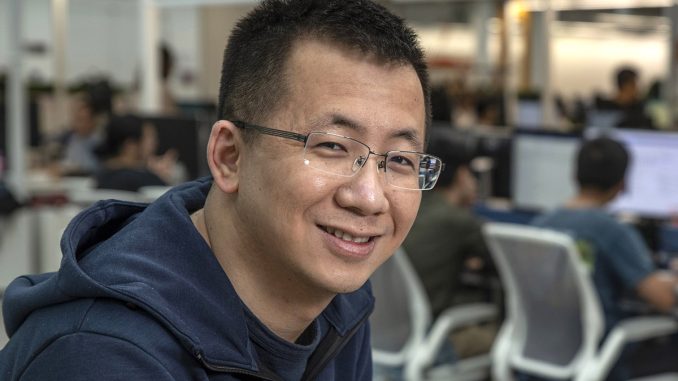
China’s richest individual, ByteDance co-founder, Zhang Yiming’s net worth is estimated by Bloomberg to be US$92.8 billion. Founded in 2012, ByteDance is the creator of the TikTok app, and its Chinese equivalent Douyin.
One of the report’s most notable findings was the resurgence of China. After several years of subdued wealth creation amid regulatory tightening and a slowing property market, China added 318 new billionaires, taking its total to 1,110—once again making it the country with the largest billionaire population. The United States followed with 1,000 billionaires, an increase of 130, while India consolidated its position as the world’s third-largest billionaire hub with more than 300 billionaires.
Hurun founder Rupert Hoogewerf described the latest figures as evidence that entrepreneurial wealth creation continues to accelerate globally, particularly in industries benefiting from technological disruption and digital transformation.
According to the Hurun report, an average of two new billionaires were created every day during the past year.
Artificial intelligence emerged as one of the defining drivers of wealth creation. Companies involved in AI software, semiconductor design, cloud computing and advanced robotics generated some of the largest increases in personal fortunes as investors continued to pour capital into technologies expected to reshape global industries.
The report also highlighted the increasingly international nature of billionaire wealth. While North America, China and India continue to dominate, emerging centres of wealth creation are appearing across Southeast Asia, the Middle East and parts of Europe as entrepreneurs capitalise on growth in finance, manufacturing, healthcare and renewable energy.
In a clear sign of the shift from ‘old money’ to new, eight of the world’s ten richest individuals made their wealth in technology. In 2000, four out of the top ten were in technology.
Despite the record number of billionaires, the report reflects a broader concentration of wealth among a relatively small group of individuals. The combined fortunes of the world’s richest continue to grow at a pace well above that of the global economy, a trend that has intensified debate over wealth inequality, taxation and the influence of ultra-high-net-worth individuals on business and public policy. Similar concerns have been raised in other recent global wealth studies, which have found that gains in financial markets have disproportionately benefited the wealthiest households.
The latest rankings also illustrate the growing influence of founder-led technology companies. Many of the largest fortunes are now concentrated among entrepreneurs whose businesses dominate artificial intelligence, software, e-commerce, electric vehicles and digital infrastructure. As these sectors continue to attract investment and reshape global markets, they are expected to remain the primary engines of billionaire wealth creation in the years ahead.
The global billionaire population exceeding 4,000 suggests the concentration of private wealth continues to accelerate, even as governments grapple with slower economic growth, rising public debt and increasing demands for greater economic equality. Whether this trend continues will depend largely on technology markets, global investment flows and the resilience of the world’s largest economies over the coming year.