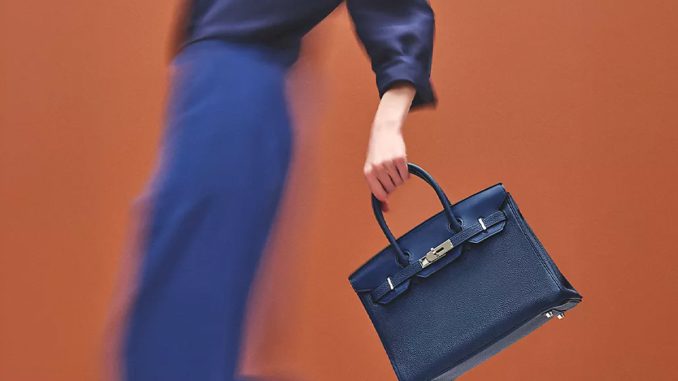
For Hermès, China represents more than a temporary sales challenge. It is a test of whether the scarcity strategy that transformed the Birkin into a global status symbol can withstand a fundamental shift in consumer confidence and spending habits.
The company’s latest results underline the problem. Although Hermès’ leather goods division continued to grow strongly, management described China as a particularly difficult market, with weaker demand for accessories, shoes and other products that often serve as entry points into the brand. The distinction is important: the wealthiest customers may continue buying Birkins, but a broader group of Chinese consumers is becoming more reluctant to spend on luxury goods.
A report in Jing Daily says, “New data provided by ReHub by platform LuxuryIQ, a market-intelligence platform from Digital Luxury Group (DLG), indicates Chinese shoppers still want the bag but are growing more sensitive to price. Hermès has raised its mainland boutique price for a Birkin 25 in Togo leather by about 22% since 2024, to 115,000 RMB ($17,100) today, LuxuryIQ’s figures show.”
A feature article written by Reuters has questioned to “Birkin Myth” and led to viral posts on, popular Chinese social media platform, Xiaohongshu.
This creates a potential weakness in the Birkin business model. If Chinese customers no longer believe that purchasing scarves, shoes and clothing will eventually give them access to a highly coveted handbag, Hermès could lose some of the additional spending generated by its allocation system. Falling resale premiums could further undermine the appeal for buyers who once regarded a Birkin as both a status symbol and a relatively secure store of value.
The danger is that scarcity alone cannot manufacture demand indefinitely. In an economy where property wealth has come under pressure and consumers are increasingly selective, being told that a product is difficult to obtain may no longer be sufficient justification for paying an extraordinary price.
Hermès still possesses advantages that competitors would struggle to replicate: craftsmanship, heritage, tightly controlled distribution and a customer base that is considerably wealthier than the average luxury shopper. The company is also continuing to invest in China, signalling that it regards the market as strategically important despite the current downturn.
But the next phase of its Chinese business will depend on whether it can persuade consumers that a Birkin is worth owning even when its resale value is less spectacular and its exclusivity offers no guarantee of financial gain.
The ultimate test for Hermès in China is whether customers still desire the Birkin for what it is, rather than for what its scarcity allows them to signal or potentially earn. If craftsmanship and brand prestige remain sufficient, Hermès may emerge from the slowdown with its business model intact. If demand has become too dependent on restricted access and resale premiums, the company could discover that scarcity is a powerful marketing tool, but not a substitute for consumer confidence.