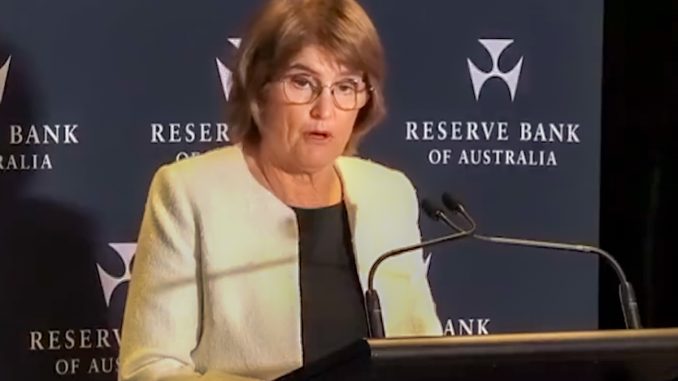
The Reserve Bank of Australia has raised the official cash rate to 4.85 per cent, delivering another blow to mortgage holders as stubborn inflation forces policymakers to tighten monetary policy further.
The Reserve Bank of Australia (RBA) has raised interest rates by 0.25 percentage points to 4.85 per cent, taking borrowing costs to their highest level since 2008 and intensifying pressure on Australian households and businesses.
The decision, announced on Tuesday, marks the fifth interest rate increase this year, reversing earlier hopes that inflation would moderate sufficiently to allow the central bank to maintain or eventually reduce borrowing costs.
The increase follows inflation data showing consumer prices rose by more than 4 per cent over the year to September, moving further away from the RBA’s target range of 2–3 per cent. The central bank has warned that persistent price pressures risk becoming entrenched throughout the economy.
Bullock warns of further economic pain
RBA Governor Michele Bullock acknowledged the hardship the decision would impose on households but argued that further monetary tightening was necessary to prevent inflation from becoming more difficult to control.
“This is not the news that many Australians want to hear, but it is what’s needed to get inflation down,” Bullock said.
She added that “some pain now will prevent even worse pain down the track”, defending the bank’s decision despite mounting pressure on household budgets.
Bullock said mortgage holders were not the only Australians suffering from higher living costs, pointing to increases in groceries, electricity, insurance and other essential expenses.
The governor also highlighted the particular difficulties facing lower-income households and renters, many of whom have limited savings to absorb further increases in living expenses.
The decision was not unanimous, with six members of the RBA’s nine-member monetary policy board voting for the increase and three preferring to leave rates unchanged.
Those opposing an immediate increase were concerned about the potential consequences for employment and the housing market, particularly after four previous rate increases this year.
Bullock said the board’s central forecasts did not anticipate a recession, although economic growth was expected to slow considerably.
“Our central forecasts do not see us going into recession, but it does see growth slowing quite markedly,” she said.
She acknowledged that sluggish consumer spending and limited income growth could nevertheless leave many Australians feeling as though the economy was already in recession.
Chalmers acknowledges pressure on households
Treasurer Jim Chalmers said the increase would create additional difficulties for Australians already struggling with the cost of living.
“Today’s decision was widely expected, but that doesn’t make it any easier for Australian families and businesses to absorb,” Chalmers said.
“It will be difficult news for many Australians who are already paying a hefty price for circumstances outside of their control.”
The treasurer pointed to the continuing conflict in the Middle East as a significant contributor to inflationary pressures, particularly through higher energy costs.
“The war’s in its ninth month and its re-escalation is putting sustained upward pressure on inflation,” he said, adding that the conflict was also weighing on economic growth.
Chalmers rejected suggestions that the federal government’s budget was responsible for driving inflation higher, but acknowledged that government policy could play a constructive role in easing economic pressures.
“Our budgets are not what’s putting upward pressure on inflation. But we can play a helpful role and that’s what we intend to do,” he said.
The government faces increasing pressure to demonstrate fiscal restraint as the RBA attempts to cool demand across the economy.
Mortgage holders face another setback
The latest increase will add to the financial burden facing Australians with variable-rate mortgages, while also increasing borrowing costs for businesses reliant on credit.
For households, higher repayments are likely to further constrain discretionary spending, potentially affecting retailers, hospitality operators and other consumer-facing businesses.
The increase also comes amid weakness in the housing market, with falling property values adding to concerns about household confidence and the broader economic outlook.
The RBA’s challenge is to reduce inflation without unnecessarily damaging employment or economic growth. Raising interest rates can moderate demand, but it cannot directly resolve every source of inflation, particularly when international conflicts and energy prices contribute to rising costs.
The split decision suggests policymakers remain divided over the balance between controlling inflation and protecting economic activity.
For the Albanese government, the latest increase represents another political and economic challenge as households confront persistent living-cost pressures.
With interest rates now at an 18-year high, the immediate priority for the RBA remains restoring inflation to its target range. Whether further increases will be required depends on incoming economic data and evidence that price pressures are finally easing.
The head of Australian economics for the Commonwealth Bank, Belinda Allen, told Nine Newspapers she expects the RBA to start cutting rates from the second half of next year, however, warned the central bank will maintain a cautious outlook. “Overall though we think the RBA will remain on edge as we enter 2027 but keep rates on hold,” she said.
NAB chief economist Sally Auld told the same masthead, “With policy restrictive, we forecast the RBA on hold. However, the RBA will remain very sensitive to any upside surprise in inflation in coming months.”
For Australian borrowers, however, the latest decision offers little prospect of immediate relief.